Septic tank concrete cost depends on tank size, waste levels, access, location, and the work needed to reach the tank. Concrete tanks may have deep, buried, or heavy lids. A clear quote should explain pumping, waste handling, access work, site needs, and any extra service before work begins.
Table of Contents
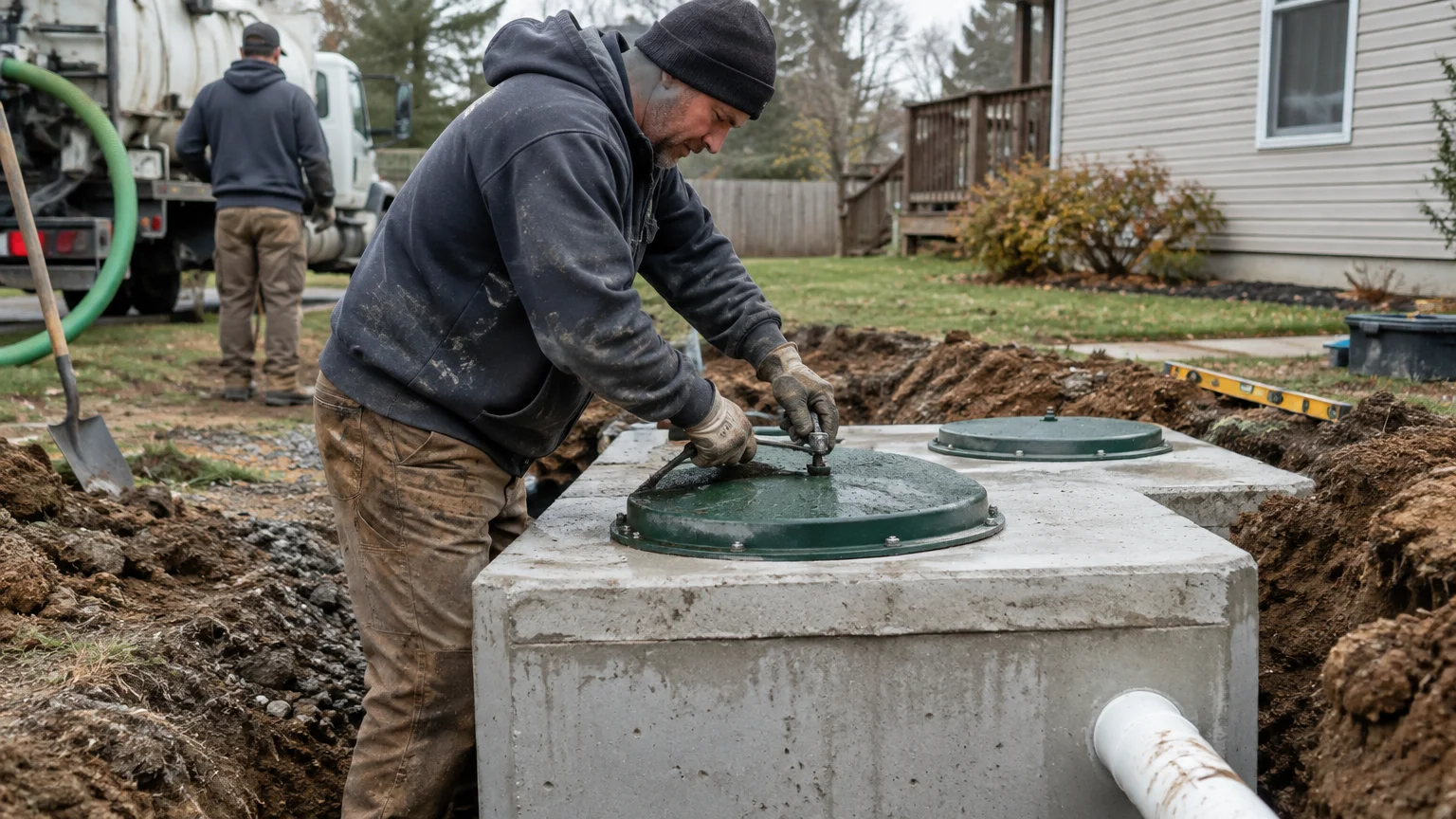
- How much does septic tank concrete cost to pump?
- What factors affect the cost of pumping a concrete septic tank?
- Does septic tank size change the pumping cost?
- How does access affect concrete septic tank pumping costs?
- How does a concrete septic system compare with other tank materials?
- What should a septic tank pumping quote include?
- When should you request a quote for concrete septic tank pumping?
- Key takeaways
- Frequently Asked Questions
- Conclusion
How much does septic tank concrete cost to pump?
Septic tank concrete cost depends on the job, not just the tank material. A concrete tank may take more or less work than another tank type. Size, access, waste levels, tank condition, and travel all shape the final quote.
Concrete tanks are strong, but older tanks can have heavy lids. Their openings may also be hard to find. A pumping worker may need extra time to locate each access point and open it safely. The quote can change if a lid is buried, damaged, sealed, or covered by roots and soil.
Septic Tank Pumping Douglasville helps property owners understand the work behind a quote. The company should explain the service in plain words. Owners should know if the plan includes pumping, waste transport, disposal, access work, and a basic visual check.
Why concrete tank pumping costs differ from other systems
Concrete, fiberglass, and plastic tanks all hold wastewater. However, each material has different care needs. Concrete tanks are heavy and may settle as the ground changes. Plastic tanks are lighter and may move in wet soil. Fiberglass tanks can last well but need care if their surfaces are damaged.
The tank material is only one cost factor. A small concrete tank beside a clear drive may be easier to service than a larger plastic tank under a driveway. The final cost is confirmed on a quote after the provider reviews the tank and property.
What the final quote should account for
A clear quote should list the planned work and known limits. It should say whether pumping covers all tank sections, normal waste disposal, and access through existing lids. If more work may be needed, the provider should explain when that work will be discussed.
Owners should not choose service from a vague promise. A useful quote connects the work to the tank and site. Septic Tank Pumping Douglasville can help customers ask clear questions before they approve the job.
What factors affect the cost of pumping a concrete septic tank?
The main factors include tank size, waste volume, pumping history, access, distance, and site conditions. Emergency pumping may need faster planning than routine service. Each part can make the job easier or more difficult.
Tank condition also matters. A cracked lid, buried opening, exposed pipe, or damaged line may slow the work. A tank that has gone too long without pumping may hold more solids. The worker may need a closer check after the tank is emptied.
Tank size, waste volume, and pumping frequency
A larger tank often holds more wastewater and solids. It may take more time to empty and handle. Yet size alone does not decide septic tank concrete cost. The amount inside and the number of tank sections matter too.
Regular maintenance helps limit heavy buildup. The right pumping plan depends on household size, tank size, water use, and solids levels. Homeowners should follow local advice and guidance from a qualified septic worker. One schedule does not fit every home.
Access, distance, and site conditions
The truck needs a safe route and a good place to work. Long hose runs, narrow drives, steep ground, locked gates, wet soil, and plants can make setup harder. A tank below a patio or driveway may need more planning.
The distance to the waste site can also affect the work plan. Local rules may guide how septic waste is moved and handled. Discuss these details before the visit, especially for properties outside central Douglasville. This includes areas near Downtown Douglasville, Lithia Springs, Winston, Villa Rica, Hiram, and nearby communities.
Does septic tank size change the pumping cost?
Yes, tank size can change the work involved, but it is not the only factor. A larger concrete tank may need more pumping time and waste handling. A smaller tank can still be hard to service if it is deep, buried, or far from the truck.
Owners may find tank details in an installation permit, inspection report, closing file, or maintenance record. A label on the tank may also show its size. These records help, but they cannot replace a safe check of the access points.
Common concrete tank sizes and service requirements
Concrete tanks come in many sizes. Local building methods, soil, property shape, and household needs affect the design. Some systems have one section. Others have two or more sections that need service during pumping.
The provider should confirm which lids belong to the tank. Opening one access point may not give full access to the system. A complete visit should consider the tank design and the visible condition of its parts.
How overdue maintenance can affect the job
When pumping is delayed, solids can build up and move toward the outlet. This can raise the risk of backups, odors, slow drains, and drainfield stress. Heavy buildup can also make it harder to check the tank and its baffles.
Delayed maintenance does not always mean the tank needs repair. It does mean the worker should check visible parts after pumping. Owners should report recent backups, sewage smells, wet ground, or changes in drain speed.
How does access affect concrete septic tank pumping costs?
Access affects the time, tools, and safety plan for the visit. A tank beside a clear driveway is often easier to reach than one below soil, plants, or a building. The provider should review access before confirming the final quote.
Owners should never remove a heavy concrete lid without the right tools and training. Septic tanks can hold harmful gases. An open tank also creates a serious fall risk. Keep children, pets, and visitors away from the work area.
Easy access compared with difficult or buried access
Easy access usually means the lid is visible, stable, and near enough for the pumping hose. Difficult access may involve digging, moving items, crossing soft ground, or working near utility lines. These conditions can change the planned work.
Some owners add risers that bring the opening closer to the surface. A professional can explain if this fits the tank and local rules. Any change should keep out rainwater and allow safe service later.
What happens when the tank location is uncertain
Owners can check permits, property records, old inspection reports, and visible cleanouts. Plumbing lines may offer clues, but they do not prove where the tank sits. Tanks are not placed the same distance from every home.
A professional may use records, careful probing, or locating tools. Digging must be careful because gas, water, electric, and communication lines may be nearby. After finding the tank, record its location for future maintenance.
How does a concrete septic system compare with other tank materials?
Concrete tanks are heavy, strong, and common on many properties in the United States. Fiberglass and plastic tanks are lighter and may have different care needs. Material affects handling, but the full system matters more than the tank label.
A septic system includes more than the tank. It may have inlet and outlet pipes, baffles, filters, a distribution box, pumps, and a drainfield. Septic pumping removes stored wastewater and solids. It does not repair every part of the system or replace drainfield care.
Concrete, fiberglass, and plastic tank considerations
Concrete may resist movement but can develop cracks, surface wear, or broken lids. Plastic and fiberglass may resist some corrosion. They can still move in wet soil or suffer harm from poor installation. Each tank type needs a safe check and proper repair methods.
Owners should not assume one material always costs less to service. Size, access, condition, and local rules may matter more. A qualified provider can explain the differences without pushing an unnecessary septic tank replacement.
When repairs, locating, or extra handling may be needed
Extra work may be needed when a lid is unsafe, the tank cannot be found, or an inlet or outlet problem is visible. A clogged effluent filter may also need cleaning if the system has one. Pumping does not automatically include repairs or drainfield work.
The provider should list pumping and repairs separately. This helps owners decide what needs quick attention and what can wait. It also gives buyers, tenants, investors, and owners a clearer system record.
What should a septic tank pumping quote include?
A septic tank pumping quote should explain tank service, access, disposal, and known limits. It should say whether the plan covers the full tank or only a certain service area. It should also explain what happens if the tank differs from the records or access is unsafe.
The final cost is confirmed on a quote after the provider reviews the job. Site conditions vary, so a general online statement cannot replace a property review. A good quote uses clear words that the owner can understand.
Core pumping and disposal services
The quote should say whether it includes pumping all accessible sections, handling removed waste, and leaving the area reasonably tidy. It should also state whether the provider will note visible concerns with lids, baffles, filters, or pipes.
Owners should ask if digging, tank locating, lid work, or repairs are separate. The answer should be in writing and plain language. This helps both sides understand the planned service.
Questions to ask before approving the work
Property owners can ask these questions before scheduling:
- Which tank openings will be reached and serviced?
- Does the plan include all sections and visible filters?
- What site conditions could change the quote?
- Will the provider record visible damage or system concerns?
- What should the owner do before the truck arrives?
These questions help homeowners, tenants, investors, and buyers compare service plans. They also help the provider bring the right tools and crew to the property.
When should you request a quote for concrete septic tank pumping?
Request a quote when pumping is due, records are missing, the tank location is unknown, or warning signs appear. Do not delay when wastewater backs up inside the home. Sewage near the tank or drainfield also needs prompt attention.
Homeowners can handle some simple upkeep themselves. They can keep cars off the drainfield, save records, watch for leaks, and use water wisely. They should not enter a tank, work around open wastewater, or lift heavy lids without professional help.
Signs that service should not be delayed
Warning signs include slow drains throughout the home, sewage odors, gurgling pipes, wet ground, green grass near the drainfield, or sewage backups. One sign may have another cause. Several signs together need quick attention.
A professional should check the system before an owner uses drain chemicals or tries a repair. Chemicals may harm helpful tank bacteria or push a blockage deeper. Tell the provider about urgent signs when requesting service.
How to prepare property records and access details
Gather permits, inspection reports, tank diagrams, past pumping notes, and recent plumbing details. Unlock gates, clear the truck route, keep pets indoors, and mark known underground hazards before the visit.
For properties in Douglasville and nearby parts of the city, local records may help confirm the system layout. Septic Tank Pumping Douglasville can review the details and explain what information may be needed before scheduling.
Key takeaways
- Septic tank concrete cost depends on size, access, waste levels, condition, and site needs.
- Concrete tanks may have heavy, buried, or damaged lids that need careful handling.
- Tank material matters, but the whole system and property layout matter too.
- A quote should explain pumping, disposal, access, and possible extra work.
- Owners can handle simple upkeep but should leave tank opening and pumping to trained workers.
Frequently Asked Questions
How deep should a septic tank be?
There is no single depth for every septic tank. Soil, slope, local design rules, and plumbing layout affect placement. A permit, inspection report, or professional locator may help find the tank.
Owners should not dig without checking for underground utilities and other hazards. Never guess where the tank is located based only on the distance from the home.
How far does a septic tank need to be from a house?
The needed distance depends on local rules, site conditions, tank design, and property layout. Older systems may follow rules from the time they were installed. A local health record or qualified septic worker can help confirm the details for one property.
How does a septic system work?
Wastewater flows from the building into the septic tank. Solids settle, oils rise, and liquid leaves through the outlet. The liquid then moves toward the drainfield, where soil gives more treatment.
Pumping removes built-up solids. It does not replace drainfield care or repair damaged system parts. A full system check may be needed when warning signs continue after pumping.
How can a homeowner find the septic tank lid?
Check permits, inspection reports, cleanout locations, and visible pipe routes. A professional can locate the tank when records are missing. Do not dig deeply or open an unknown lid alone.
Septic gases can be dangerous, and an open tank creates a fall risk. Keep children and pets away from any opening during the search.
Who installs septic tanks near me?
A licensed or approved installer can design and install a system when local rules allow it. The right provider depends on soil testing, permits, property size, and system design. Septic Tank Pumping Douglasville can help Douglasville property owners know what to ask before choosing a contractor.
Conclusion
Concrete septic tanks need a service plan based on the actual property. Size, access, tank condition, waste levels, disposal needs, and local rules all shape the quote. Good records and clear access can make the visit easier.
Ask for a clear quote before work begins. Confirm what pumping includes and which tasks are separate. Contact us to discuss concrete tank pumping needs and arrange the next step for your property.